

Challenge
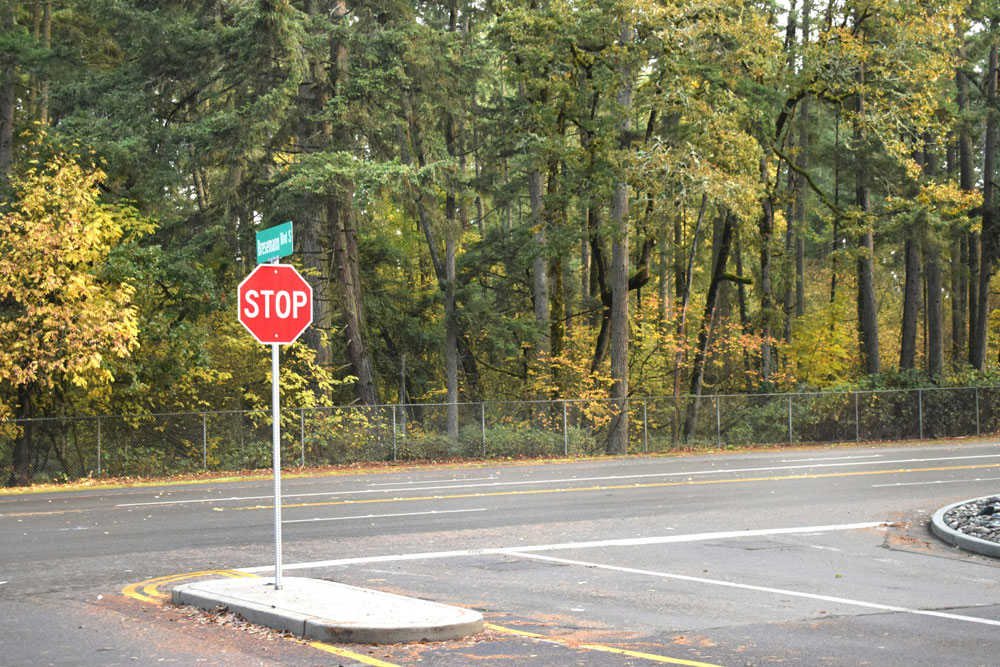
Traffic accidents are each a challenge, because not in every traffic situation it is enough to simply respect the posted horizontal and/or vertical signage. Thus, in this particular situation, the main challenge was to prove that although our client did not have the right of way, he still fully complied with the rules for safe participation in traffic and that the main factor in the occurrence of the traffic accident was the speed of the other participant, which was 50 km/h greater than the maximum permitted by the traffic sign.
In such traffic situations, it is of great importance to provide complete documentation, photo albums, video recordings (if any), road markings, discarded parts, etc. which will certainly be of crucial importance to a suitably skilled person who will go to the scene and, upon reconstruction of the event, correctly calculate the speed of movement of all participants. During the reconstruction, our goal was to determine whether when our client started to enter traffic, he was able to notice the other participant, at what distance he was able to notice him, and whether he represented an obstacle to the safe movement of other traffic participants.
After collecting all the evidence, it was indisputably determined that at the moment our client started to merge into traffic, the other participant was 75 meters away from the point of contact. It was determined that if the other participant had driven his vehicle at 30 km/h, the speed limit allowed at the scene of the accident, the traffic accident would not have occurred at all, i.e. our client would have safely entered traffic and would not have been a traffic obstacle for the other participant at any point.
The court proceedings were initiated by the Public Prosecutor’s Office with a criminal warrant. We filed an objection by submitting a list of evidence, including a traffic technical expert report. After presenting all the proposed evidence, by order of the Court, evidence was presented with a traffic super-expertise prepared by three skilled traffic engineers who confirmed the defense’s thesis that the key factor in the occurrence of the traffic accident was the speed exceeding the maximum permitted, and not the Stop sign as was shown in the Penalty Order.
The first-instance procedure was concluded positively, meaning our client was acquitted of charges. Given that a Super Expertise was performed in the procedure, it followed that there would be no appeal, thus the verdict became final.